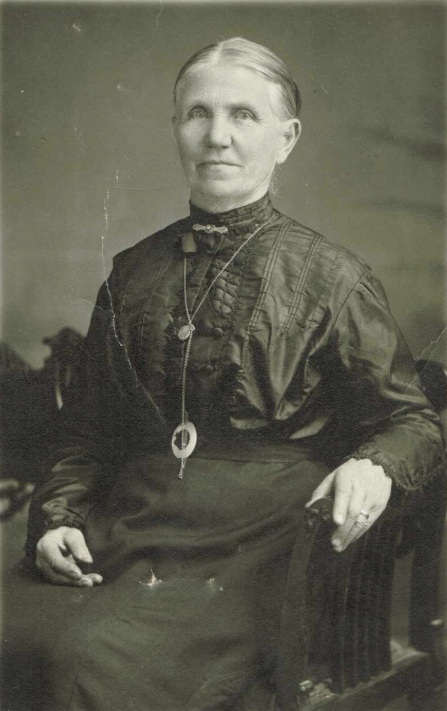
Lovisa Matilda Homer Thornton
BY JOHN THORNTON
Lovisa Matilda Homer, the sixth child of Eliza Williamson and Russel King Homer, was born at Kanesville, Iowa, September 5, 1848. The first few years of her life were spent in Iowa and on a trip to Pennsylvania and back where her parents lived for one year. When she was 10 years old, in the year 1858, she crossed the plains with her parents in a wagon company which was drawn by teams. She helped with various chores pertaining to the welfare of the company most of the way.
One of the outstanding experiences of her life was the occasion when lightning struck their tent on the plains, as is described in the history of her brother, William. She, together with the other members of the family had taken shelter from the sudden thunder shower in the tent when the lightning struck the tent pole. She was knocked so completely unconscious that they thought she was dead, but through the faith of her parents and administration of the elders she regained consciousness and recovered.
As a child in Salt Lake City she attended school and learned much through her own efforts. For a time, she was a teacher in the 7th Ward Sunday School, becoming well acquainted with and intensely interested in the doctrines of the Church. She maintained this interest throughout her life, always reading the Juvenile Instructor, Improvement Era, the sermons of the Church authorities, and other Church books and references.
While living in Salt Lake, she was privileged to have the personal acquaintance of Brigham Young, Heber C. Kimball, Daniel H. Wells, and many other prominent figures in the Church.
She became acquainted with a young man by the name of Hyrum P. Rider who came to board at her father’s home. He was a carpenter doing some work on the Salt Lake temple. He and Lovisa were married in the Endowment House May 10, 1867. A few months after their marriage she learned that he had a wife and family in Michigan from whom he had not been divorced. She had her marriage annulled before her son, David Rider, was born on February 2, 1868.
After this unfortunate experience she continued to live with her parents, doing the usual work of the women of that time, spinning yarn, weaving cloth and carpets for her father’s family and others in order to clothe herself and her baby. The following summer she took her child to Three Mile Creek and lived with Prianna Homer, her father’s fourth wife, whom she helped with all of the general work of caring for her family, including weaving, spinning, knitting and other tasks in addition to which she taught Prianna’s boys to read and write. For this summer’s work she received her board and calico enough to make her baby three dresses.
On February 6, 1871, just after her son’s third birthday, she married Charles Thornton and went to live with him in Smithfield in Cache Valley, taking with her eight-year-old half-sister, Delania Anderson Homer. Two children, Lovisa and Charles, were born to them there. At this time her husband was engaged in freighting from Corinne, Utah to Silver City, Montana, so he was away from home for long periods leaving Lovisa to take care of the family garden and the cow.
In 1876 she and her husband were called by the Church authorities to go to Utah’s Dixie to help settle that part of Southern Utah. The first year they had little to eat except sorghum and bread made from whole crushed wheat. Not having a balanced diet, they were afflicted with sore eyes and chills and fever. Their next child was born to them at Springdale. Lovisa’s health had never been very good. She had quite a difficult time during the four years they lived there, after which they returned to live for some years at Clarkston, Cache County. From Clarkston they moved to Red Rock near Swan Lake, Idaho. While living there, she and her husband helped a number of good people to escape the persecution of political racketeers who were persecuting them for their religious beliefs.
Although she was of a very nervous temperament, she had a sunny and affectionate disposition, always being very charitable to everyone even when she was in very poor circumstances herself. She never turned anyone away from her door hungry. On one occasion a very nicely dressed elderly man came to her door and asked her for a glass of milk. She gave him the milk and offered him bread to go with it. This he refused, saying e God bless you, Sister, you and your family will always have food.” She then turned her back for a few moments to attend to something in the kitchen and when she looked again he had disappeared. She went out and looked for him but he was nowhere in sight. He had not had time to go any distance away and his tracks led only to the corner of the house where they disappeared. From his appearance and all the circumstances, and her feelings at the time, she always felt sure that he was one of the three Nephites. His promise to her was fulfilled. In later years during the panic of 1898 when many of her neighbors were on the point of starving, she always had food to divide with them, which she always did divide.
In the spring of 1897 the family moved to Parker, Idaho, where she resided for one year. Her second daughter died, which greatly bereaved her. In 1898 they moved to St. Anthony where she resided until 1912. While there she worked in the Relief Society and other Church organizations. She served as Counselor of the 1st Relief Society organized in St. Anthony. Two more of her children, a daughter and a son, and her husband also passed away. This left her very lonely, so in 1912 she moved to Blackfoot to live near her sister, Rosette Homer Lutz. The ward was very large territory so Relief Society meeting was held in the various homes, very often being held in Lovisa’s home where she enjoyed having the meeting and made everyone welcome. Her home just outside of Blackfoot was by the side of the highway “where the world goes by.” There her friends and relatives were always stopping in to see her, which she enjoyed very much as she lived alone in her declining years. She was affectionately called e “Aunt Visa” by literally hundreds of people, many of whom were not related to her in any way.
In her later years she was able to travel and enjoyed very much to visit among her many relatives and friends; going as far as San Francisco, California and Alberta, Canada.
She lived a long, honorable life and was regarded as a woman of the finest integrity of character, her credit was always good; she could have bought practically anything she wanted without any note or security. She passed away on May l, 1935, shortly prior to her 87th birthday.
Here children were as follows:
David Homer Rider……………………………………………………. married Maud Douglas
Lovisa Matilda ……………………………………………………………. married Thornton Frank coffin
Charles Thornton, Jr. ………………………………………………… unmarried
Russel King Thornton ……………………………………………… unmarried
William. Richard Thornton …………………………………….. unmarried
Nancy Thornton ………………………………………………………… unmarried
Edgar Thornton …………………………………………………………. married Mabel Hansen
John Thornton ……………………………………………………………. married Elizabeth Harbaugh
Mary Eliza Thornton ………………………………………………… unmarried
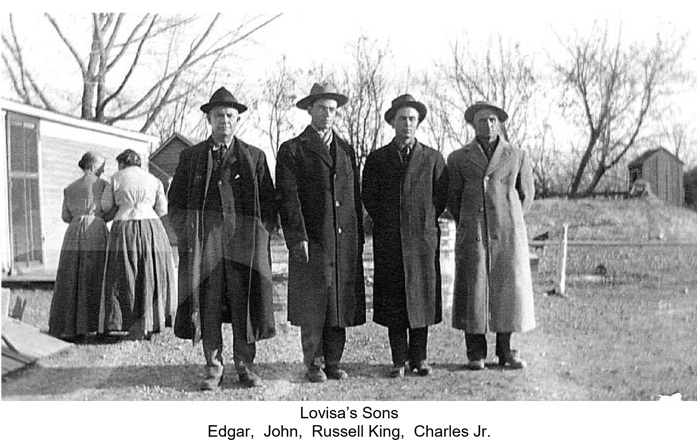
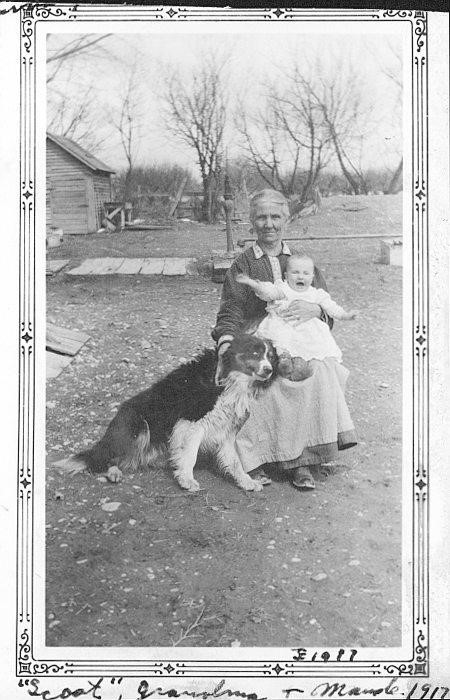
Lovisa Matilda Homer Thornton
Written by LOIS K. PARRY 1994
LOVISA MATILDA HOMER was born at Kanesville, Pottawattamie County, Iowa, on 5 September 1848. She was the sixth child of Russell King and Eliza Williamson Homer.
Lovisa’s family lived in Iowa until 1858. They moved to Crawford County Pennsylvania when Lovisa was 4 years old, in 1852 for a year. In 1853, they moved back to Iowa. Lovisa’s brother, Benjamin John, was born in Pennsylvania.
In the summer of 1858, when Lovisa was 10 years old, they packed up their covered wagon again, and headed west. Her father was the captain of the wagon train. There were 9 people in the family now.
Lovisa had to help with many of the chores along the way. They were going to Utah.
They had a big tent to cook in. One day, as their tent was being set up for the night, it became very stormy. There was a lot of thunder and lightning. When the tent was ready, Lovisa and her mother, and brothers and sisters hid from the storm in the tent. Lightning struck the tent pole. Lovisa and her mother and two of her brothers were knocked
to the ground. Everyone thought they were dead. The Elders gave each of them a blessing, and they all recovered. They kept traveling westward
Lovisa and her family arrived in Salt Lake City, Utah on 7 October 1858. They were glad to reach Utah. Lovisa was 10 years and 1 month old. She was baptized a member of the Church in 1859.
Lovisa was taught by her mother to do many chores. She could spin yarn, weave cloth and carpets. She learned to cook and sew. She could mend torn clothes, or make new ones. She was taught to knit as well as learning to quilt. She learned to make very small, even stitches in her quilts. She also learned to make candles and soap.
Lovisa and her family lived in Salt Lake City for several years. Lovisa went to school and studied very hard. She liked to learn about different things. She taught Sunday School for a while. Lovisa and her family were friends with Brigham Young and Heber C. Kimball and other church leaders.
In 1867, when Lovisa was 19 years old, something very sad happened to her. She met, and married, a man named Hyrum Rider. She thought he was a very nice man, but he had not told her the truth. One day, when they had been married just a short time, a lawman came and arrested him. They took him away. He was married to another lady in a different state. Lovisa was going to have a baby. Lovisa went to live with her mother and father while she waited to have her baby. She had a wonderful baby boy that she named David Rider. She loved her baby very much.
In the summer of 1868, Lovisa and David went to Three-Mile Creek, near Brigham City, Utah to stay with her father’s fourth wife, whose name was Prianna. She helped Prianna with all the tasks of cooking and cleaning and weaving. She taught two of Prianna’s boys to read and write. For her work that summer she received food and enough cloth to make her baby three sets of clothes.
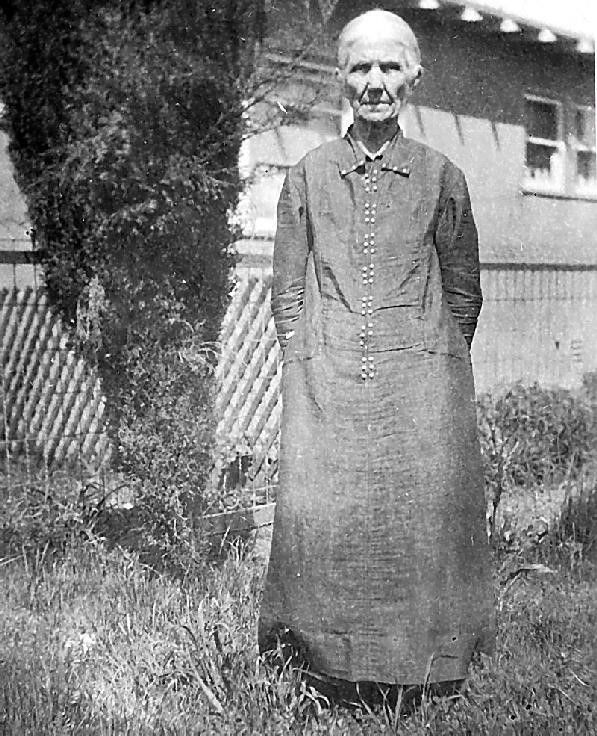
After that summer, Lovisa and David returned to Salt Lake City to live with her parents, Russell and Eliza. She met Charles Thornton when he was peddling fish, duck, and feathers door-to-door in Salt Lake.
Charles visited the Homer family home whenever he was in Salt Lake. Very early in the morning he would come to their house and leave a fish, or some fat ducks on their wall pole, and lean it against their kitchen door. This made it so the fish and ducks would fall on the floor when someone opened the door. In the evening Charles would stop by to visit and get messages to take back to Lovisa’s brother William. He was a partner in this fish-duck-feathers business.
Lovisa and Charles visited together. They learned to love each other. Charles became very fond of her son, David, too. Charles was a man of small physical build, about 5 feet 3 inches, so he was a good match for Lovisa, who stood about 5 feet 2 inches tall. On 6 February 1871, Lovisa Matilda Homer married Charles Thornton in Salt Lake City, Utah. Charles accepted David Rider as his son, and raised him with their other children.
Lovisa and Charles went to live in Smithfield, Utah, near to Charles’ father, William Thornton. William was very kind to Lovisa when Charles was away working. Lovisa took care of their family garden, milked the cow, and cared for the chickens. Two of their children, Lovisa and Charles, Jr. were born here.
Lovisa had another neighbor in Smithfield. His name was Martin Harris, who had been shown the Golden Plates by Joseph Smith. Lovisa and Martin were very good friends.
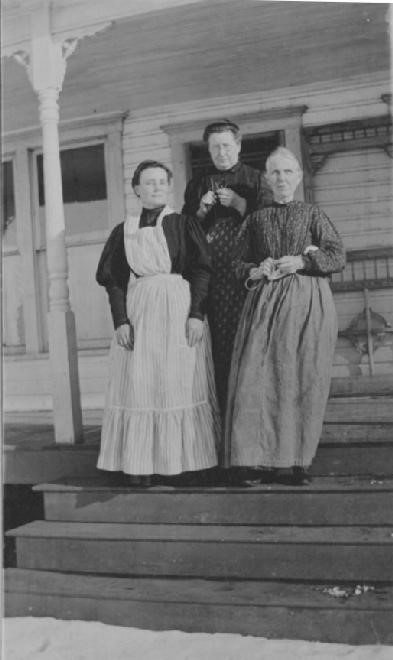
He would help hoe the garden. Lovisa subscribed to the Deseret Semi-Weekly News. When paper day came, she would read the paper to Martin Harris, because she could read better, and faster, than most people. Other people liked to read her newspaper when she was finished with it. She always shared.
In 1876 Lovisa and Charles were called by Brigham Young to go to Utah’s Dixie, to help settle the area. They lived in Springdale. They didn’t have very much to eat the first year, except molasses and whole wheat bread. They lived there four years. Lovisa’s home in Springdale had many cracks in it. Lizards liked to crawl in and out of the cracks.
One child was born to Lovisa and Charles in Springdale. His name was Russel King. Lovisa and Charles next moved to Clarkston, Utah. Their fourth child, William was born here.
In 1882, Lovisa and Charles moved their family to Red Rock, Idaho. They bought a small farm by a creek. Nancy,
Edgar, John (my grandfather!), and Mary Eliza were born here.
Until a school was built, Lovisa taught her own children at home as best she could. When the school was finally built, all her children, except Mary, attended. The school building was also used for Sunday School, dances, programs, and other occasions. No one was ever turned away from Lovisa’s door hungry or in need. Once a man came to her door and she gave him some bread. She asked if he wanted milk. He said no, and went away. She looked outside, and his footprints ended by the corner of the house and he was nowhere to be seen. She and Charles also helped to protect members of the church who were being persecuted.
In 1895, Lovisa and Charles packed up their wagon, and their children, and moved to Parker,
Idaho. They rented a farm. In 1896, they moved to St. Anthony, Idaho. In 1905 her daughter, Mary died. In 1907, Lovisa’s husband Charles, became ill and died. This made Lovisa very lonely. She stayed in Parker until 1912, when her son Russell died in an accident. They were all buried in the Parker cemetery.
Because she was lonely, Lovisa decided to move to Blackfoot, Idaho, where her sister, Rosetta Homer Lutz, lived. She bought a farm across the road from her sister. They enjoyed each other’s company. They liked to visit each other after their morning chores were done. When Lovisa’s youngest son, John, married, she asked him to live on the farm with her. Dave Rider built him a small house on a hill not far from her home. John and Elizabeth moved into that little home when they were married. David Rider was loved by all of his half-brothers and sisters, and by his nieces and nephews, also.
When John and Elizabeth’s children were born, Lovisa sometimes tended them, and played with them. She would tell them stories and play games with them. When they got older, she would put a broom upside down on her porch with a white cloth over it. This was her signal to her grandchildren that it was okay for them to come visit her. Lovisa would make her grandchildren some great big sugar cookies. These cookies were one of their favorite treats.
Lovisa loved the Church and was very faithful in attending the meetings. Often they would hold Relief Society in her home. She always paid her tithing no matter what, and when the ward needed money for a new building, she was the first one to give her donations.
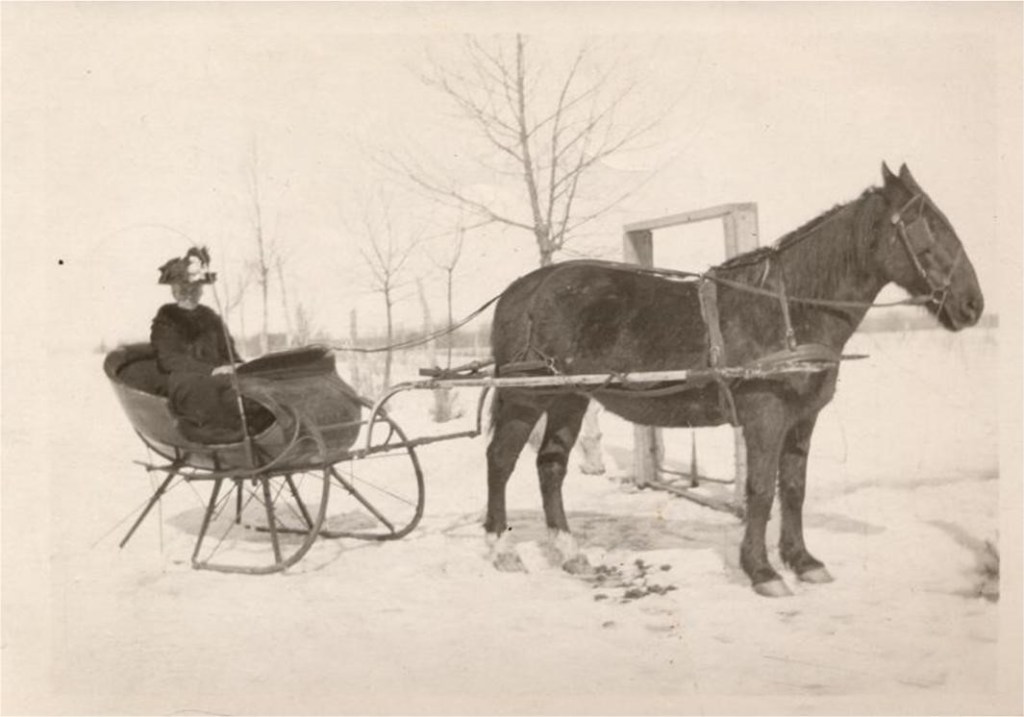
Lovisa could drive a buggy, but she was afraid of horses so she drove her buggy only when she needed to go visiting teaching, or to Relief Society. In the summer it had wheels. In the winter she had a special sled with runners to make it slide over the snow. Everyone loved Lovisa. She liked to write letters. She always received more letters than anyone else on the mail route. People stopped by her home and were always welcome. She was called “Aunt Vicey by many people, even those who were not her family.
Lovisa liked to travel. She went to visit her children in San Francisco, California. She spent one whole winter in Alberta, Canada with her daughter, Lovisa Coffin, and her family. On these trips she was able to take the train… instead of a covered wagon, or a buggy.
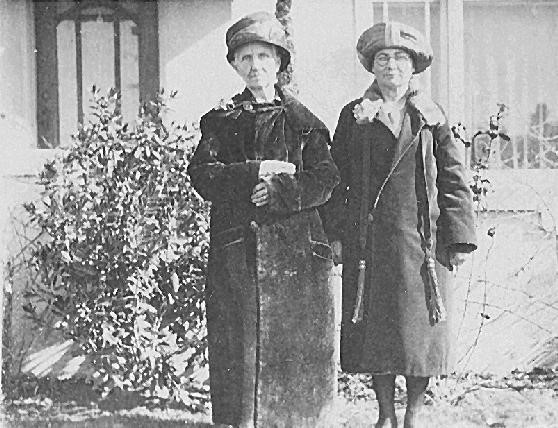
Lovisa Matilda Homer Thornton died quietly at her home at Blackfoot, Idaho, on 5 May 1935. She was 86 1/2 years old. She was buried in Parker, Idaho, near her husband Charles, and some of her children.
Note: All the years of her life Lovisa wrote in her journal about the things that were important in her life and her family’s life.[1]
[1] We, her posterity, are very grateful for this courageous and stalwart lady.
A Thornton Family StoryBook, Created, Designed, Compiled, and Written by Lois K. Parry, 1994 at Bountiful, Utah

