Massachusetts Bay and Plymouth Colonies
Plymouth and the Massachusetts Bay Colonies were originally two separate entities for most of the 17th century. Plymouth Colony was founded in 1620 by the “Pilgrims”, while the larger and more powerful Massachusetts Bay Colony was established in 1630 by the “Puritans”. They were combined into a single royal province in 1691. [1, 2, 3, 4, 5, 6]
Key Differences at a Glance
- Founders & Faith: Plymouth was settled by religious Separatists (Pilgrims) who wanted to break away from the Church of England. Massachusetts Bay was settled by non-separating Puritans who only wanted to reform the Church from within. [1, 2, 3]
- Government: Plymouth was governed under the informal Mayflower Compact. Massachusetts Bay had a highly structured corporate government backed by a royal charter. [1]
- Growth & Size: Massachusetts Bay began with 1,000 colonists and quickly boomed. Plymouth was much smaller, starting with just over 100 people and focusing mostly on subsistence farming. [1, 2, 3, 4]
- Relations: While Massachusetts Bay had frequent conflicts and expansionist land disputes, Plymouth initially relied on peaceful alliances. []
How They Came Together
As Massachusetts Bay grew rapidly—making Boston a major commercial port—Plymouth struggled economically. After King Philip’s War (1675–1678) left Plymouth financially and demographically devastated, the English Crown revoked the original charters and combined both into the unified Province of Massachusetts Bay in 1691. [1, 3, 4]
To explore the unique timeline of these early settlements, you can read the Commonwealth of Massachusetts’s Tale of Two Colonies guide, or look into the absorbing details of the Massachusetts Bay Colony on Wikipedia. [1]
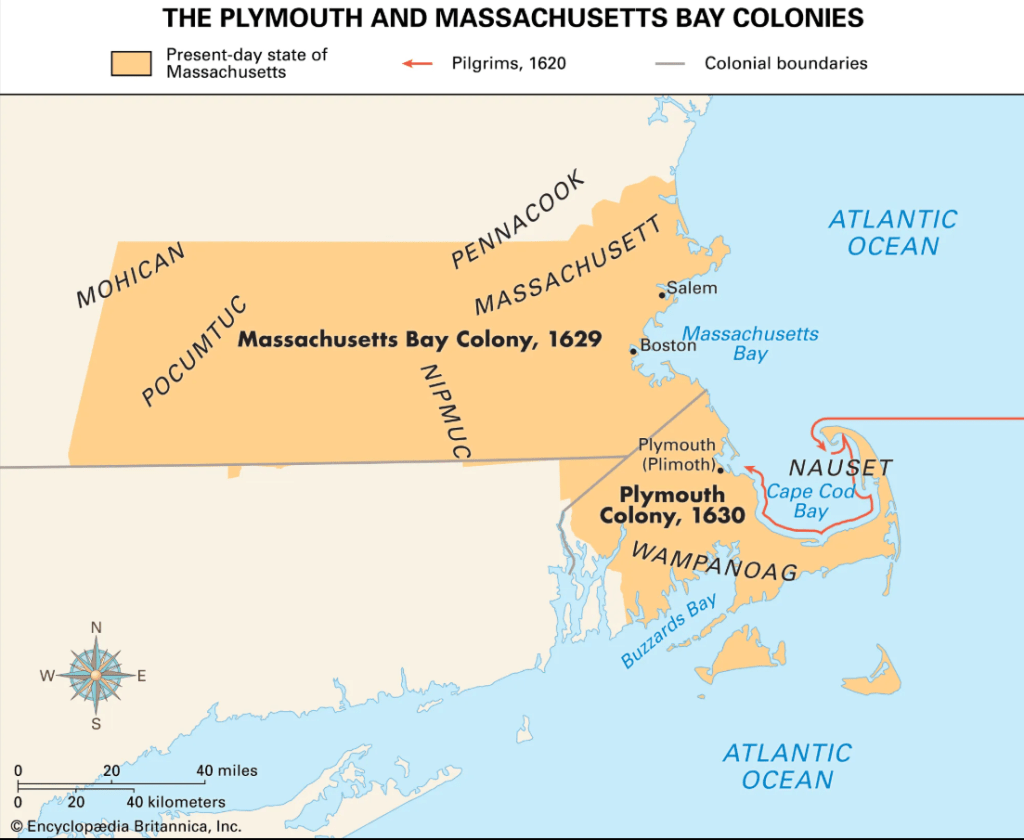
Image Source: https://www.britannica.com/place/Massachusetts-Bay-Colony

