On and Around June 24, 1777
The mid-summer of 1777 was a tense, transitional period in global history, particularly for the American Revolutionary War. While armies maneuvered behind the scenes on June 24 itself, the surrounding month was packed with historic breakthroughs, high-stakes military campaigns, and notable transitions.
While no massive battle erupted on this exact day, June 24 and its immediate neighborhood were anchored by critical military movements:
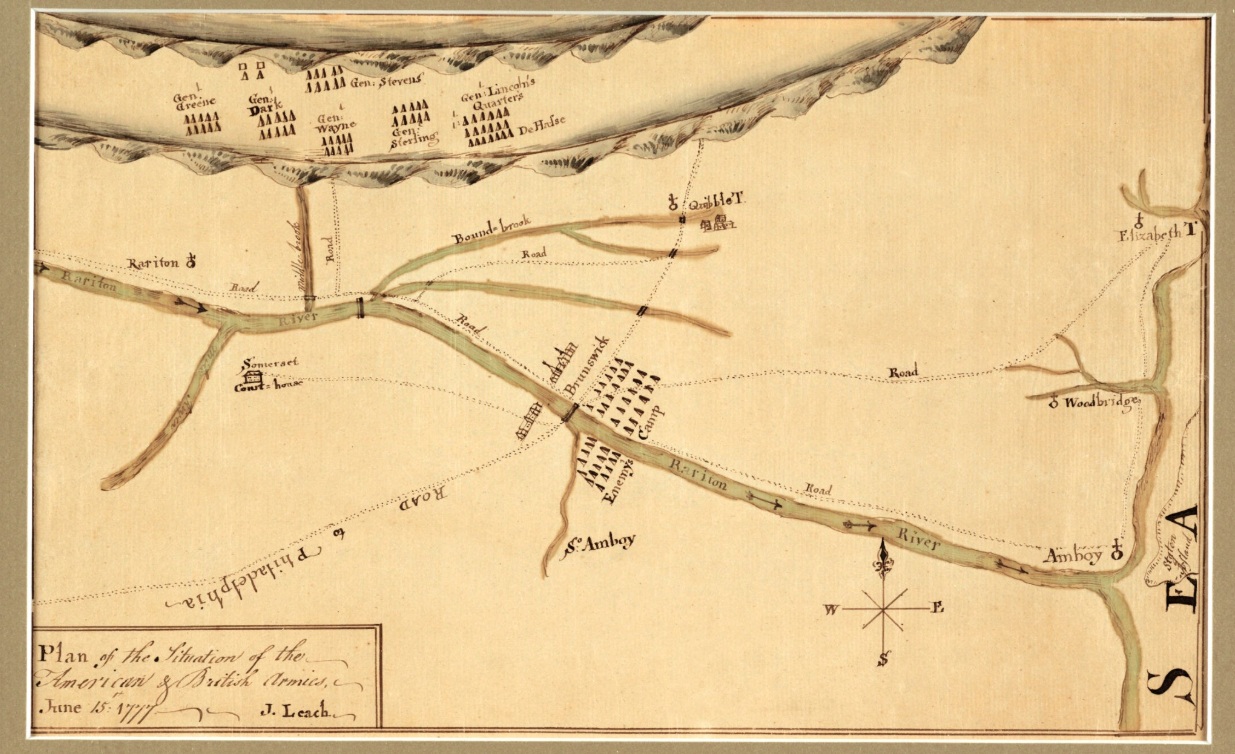
- The Watchung Mountains Maneuvers: General George Washington’s Continental Army was engaged in an intense game of strategic cat-and-mouse with British General William Howe in New Jersey. Following minor clashes near New Brunswick, Continental soldiers recorded marching on June 24 to occupy Lincoln Gap at the southern end of the Watchung Mountains. This position allowed Washington to securely track Howe’s retreating forces without being lured into a costly battle on open ground. This tactical chess match culminated just two days later on June 26 in the Battle of Short Hills.
- The Launch of HMS Alert: Across the Atlantic in Dover, England, the British Navy launched the HMS Alert, a 12-gun cutter. It went on to play a brief but prominent role in scouting and capturing American privateers before disappearing mysteriously under a French flag later in the war.
In Yarmouth & Barnstable County (Cape Cod), Massachusetts
During the summer of 1777, Cape Cod was isolated but heavily impacted by the war. Maritime commerce—the lifeblood of Yarmouth—had ground to a near-total halt due to the suffocating British naval blockade.
- Coast Guarding and Local Militia Duty: Yarmouth men were constantly rotated into local militia units to guard the exposed beaches of Barnstable County against foraging parties from British warships anchored in Cape Cod Bay. Town records from 1777 show frequent expenditures for gunpowder, lead balls, and bounties to encourage men to enlist in the Continental Army.
- The Smallpox Crisis: Compounding the stress of the war, Barnstable County was dealing with a severe smallpox outbreak during this period. Towns like Yarmouth were actively debating the establishment of isolation hospitals and regulating inoculation practices to prevent the disease from wiping out the local population.
June 1777: Macro-Historical Developments
Viewed through a wider lens, June 1777 altered the geopolitical landscape of the war:
- Launch of the Saratoga Campaign: This month marked the beginning of Britain’s most ambitious strategic offensive of the war. Major General John Burgoyne led a force of 9,000 British regulars, Hessian mercenaries, and Native American allies south from Quebec. The strategic objective was to seize control of the Hudson River corridor, effectively isolating New England from the rest of the rebellious colonies. This campaign would ultimately culminate in a catastrophic British defeat at Saratoga later that autumn.
- The Flag Resolution (June 14): The Second Continental Congress codified a unified visual identity for the nascent rebellion, passing a resolution that established the official design of the American flag: 13 alternating red and white stripes with 13 white stars in a blue field.
- The Lafayette Connection (June 13): The 19-year-old French aristocrat Gilbert du Motier, Marquis de Lafayette, landed in South Carolina. Defying the explicit orders of King Louis XVI, Lafayette volunteered to serve in the Continental Army without pay. His arrival solidified a crucial symbolic and military bridge between the United States and France.

